
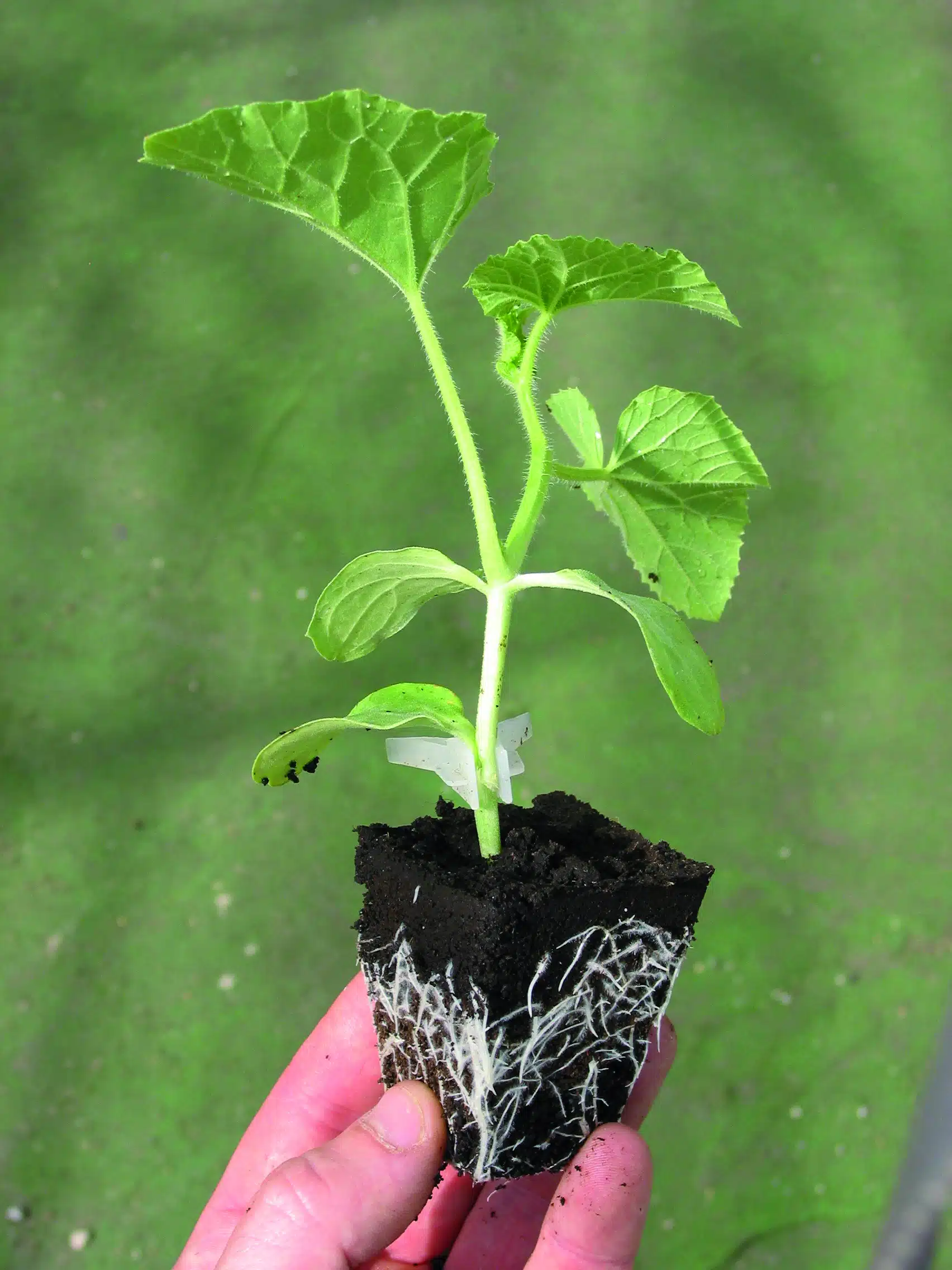
Rootstock variety. interspecific (shintoza (maxima x moschata)) hybrid variety suitable for use as a rootstock for the grafting of cucumbers. used to improve plant vigour and strengthen disease resistance; also aids root establishment in colder growing conditions. all glasshouse f1 all female varieties listed may be used as scion material with this rootstock. resistant to fon (0,1,2), fom (0,1,2), vd, mi, mj. Also suitable for use with Melon and Watermelon varieties. Also suitable for use with Melon and Watermelon varieties.
£3.25 for 10 seeds.
Cultural method
Grafting tomatoes onto a rootstock gives the grafted plant increased pest and disease resistance, and improves the overall vigour of the plant. Grafting of tomatoes is a practice which has been used for some time, but on a limited scale. However, with the increasing concern over chemical treatments, grafting is regaining favour, allowing standard varieties to be grown in unsterilised soil.
Step by step guide.
Materials
• Clean sharp craft knife
• Reel of clear tape approximately 2-3cm wide.
Method
1. Sow rootstock seeds approximately 4 days prior to sowing the tomato seed. The rootstock is slower to germinate and will need to be a similar size to the tomato plant to enable a good graft.
2. Prick out the seedlings when they are large enough to handle, placing one tomato plant and one rootstock plant side by side in the centre of a 9cm pot. The rootstock sometimes has a different leaf type to normal tomatoes for identification purposes because it is important to know which is which when grafting, therefore keep them separate and well labelled.
Tomatoes – Grafting
3. When the plants reach approximately 10-15cm high they are ready to graft. Ensure the compost is kept moist to aid the grafting process.
4. Remove the seed leaves (cotyledons) from both the rootstock and the tomato plants (wilting will occur quickly so speed is important).
5. Remove the top leaves of the rootstock (this can be left until after grafting to reduce wilting). Make a downward cut at an angle of 45o halfway into the rootstock, about 1-1.5cm deep. Make a corresponding cut upwards in the tomato plant at the same height. Fit the two cuts together and fix with a 2-3cmwide strip of clear sticky tape, making sure the tape covers the cut, or use a tomato grafting clip.
6. Grow on with high humidity, which can be achieved by the use of a polythene tent suspended free from the plants. Inspect regularly and remove the polythene as soon as the graft has healed over (normally within a few days).
7. Leave the original tomato root and the grafted rootstock in the compost and plant out as normal
Reviews
There are no reviews yet.